Sunday, July 1, 2018
God/Brahman is the Ocean of Love and All-Consciousness: Shiva and Shakti
God/Brahman is the Ocean of Love and All-Consciousness: Shiva and Shakti: Shiva and Shakti Consciousness and Energy https://brahmanistheoceanofallbliss.blogspot.ca/2018/04/shiva-and-shakti.html Amongst t...


Sunday, August 31, 2014
The Breath Can Lead to Realizing the Natural State
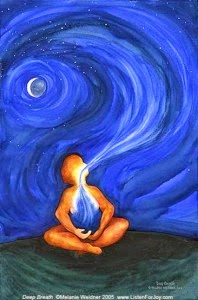
The article below describes how to teach yourself to Calm the discursive thought in your mind and to live, truly Live, your life as the Naturally Blissful Being you really are. It is not magic nor is it complicated in any way but it does take a continuous effort to refocus your mind back onto your body where it should naturally Be. The mind and the body are not two separate things but have become "separated" by the chaotic habit of discursive thought or thinking that we humans fell into long ago. We got "Lost" thinking about Reality instead of just Living IT! I will save the when and the how this happened for another time because it gets into the very complex topic of the evolution of the brain. Also, it is not necessary to understand how we got "Lost" in order to find our Way back. Enjoy this very important article, put the information to use, and please check out the other articles at the bottom of this post. They contain more information that can help you get back to your True Nature.
Namaste'
The Breath Can Lead to Realizing the Natural State
There is a technique that has been around for thousands of years and has been used to point countless sentient beings toward their natural state. Simply following the breath. There are many variations of this but we want to keep it very simple. Our true nature, our natural state is very simple. But because it is so simple we completely miss it. It is always there yet it goes completely unnoticed. It's the foundation for all appearances. It exists before thought and interpretation arises in mind. It is before language. It is beyond conceptual thought. It is our foundation. Our basic, eternally free, pristine, primordial, free from suffering state of being. It is consciousness without content.
Techniques are used as aids to help calm and center the mind. When thoughts have subsided, and there is more empty space between thoughts. When the chain of unending thoughts has been broken, it is easier for insight or wisdom to arise. You see, everything that we believe we know, all of our opinions, judgments and interpretations are simply thoughts. They have no existence apart from the thinking mind. Reality functions perfectly without them. What we think about existence has nothing to do with existence. They are only thoughts superimposed onto reality. Existence cannot be known through thought. We can speculate about the observed using thought and language but thought can never penetrate reality. It will only be speculation based on observation. Thought can only be on the surface.
We are not separate from existence. We do not live life. We are life itself. We do not live within the universe, we are the universe. We are existence itself. All that is seen and unseen is nothing separate from who we are. The thinking, dualistic mind separates all things experienced into parts and pieces. When abiding in the natural state, there is no separation. There is no this or that. Everything simply exists as it is. All of these things aforementioned are simply thoughts about reality. The mind has added these things to reality from its previous conditioning. The mind has been conditioned by the society, the family, the friends. The mind is conditioned to express what it experiences with words, labels and gives everything attributes. Reality is wordless, thoughtless and without attribute. Although who we really are is inexpressible, we must use words in order to communicate that there is something which is inherent to us all that is naturally free and communicate methods which point to that. Whether it's following the breath, mindfulness practices, pranayama, or many of the countless meditative practices that exists today. All genuine practices are simply pointers to your natural state.
When you breathe, notice where the sensation of the breath is the most dominate. Maybe the sensation of the breath is dominate at the tip of the nose. Maybe the sensation of the chest moving up and down is the most dominate. Maybe the sensation of the abdomen moving in and out from the breathing process is most dominate. Whatever is most dominate within the attention, use that as your breath spot. When one moves the attention to the breath, move it to that spot.
In the beginning it may be very difficult to keep your attention on the sensation of your breath. The mind is not used to being held hostage at one point. It hops about from thought to thought like a monkey hopping from tree to tree. In some traditions the mind is referred to as "the monkey mind". Because it never stops moving from thought to thought like the energetic monkey hopping from place to place. It will take a lot of practice to tame this monkey mind. And the practice must be continuous.
Whenever you remember, bring your attention to the breath spot for as long as possible. If the attention wanders away from the breath that's fine. If it happens 1000 times that's normal. You have to tame the mind. Not forcefully. Gently. When an emotion (emotions are rooted in thought) or thought pops up, quickly bring the attention to the breath spot. Don't follow the thought or finish it. Just let go by moving the attention to the place where the breath sensation is most dominate. Practice this way when ever you remember. You will forget many times. You may even forget for an entire day. Don't despair. That's normal for an untamed mind. You see, what will eventually happen is following the breath will become habitual. Your attention, from continuous practice, will naturally go to the breath as its natural resting place. Now, your attention endlessly follows every thought in the mind. Thoughts in the average worldly person are like links in a chain that is endless. The mind babbles away about everything it experiences. With breath practice, the attention is being habituated to the breath so that its natural resting place will be the body and not your thoughts. If your attention is on the body and not on your thoughts, what is there to trouble you? Your thoughts are at the root of all your troubles. Just keep practicing at all times when you remember. It will not be easy. Eventually through continuous practice you will not even need the support of the breath. Your breath is just an aid to help bring the attention away from thoughts and also the mind will become naturally one-pointed as a result. This creates a situation which allows tranquility to gain dominance over thoughts and it becomes natural within consciousness. When the mind is tranquil, there will be a clarity that you have never before known. When you experience your life without thoughts, you will have experience and will be able to compare it to your life with thoughts. You can purposely observe life around you without thoughts then compare it to observations with thought. You will see from direct experience how thought defile all that is experienced or perceived ( because it adds to the experience, instead of allowing the experience to be as it naturally is). You will know without doubt that thought is the root of all misery.
Abidance in the natural state is bliss beyond imagining. In this case, the word "bliss" does not refer to some over stimulation of the physical body. Although in the absence of thought (concentrated mind) there are sometimes physical sensations in the body that are beyond any physical sensation normally felt. There is a feeling of rapture. All the cells in the body are exploding with energy. But in this case "bliss" is the absence of all that you are not (thoughts). When all that you are not (thoughts) has been seen through, suffering will be no more.
Just keep practicing. Don't give up. It will be very difficult. Maybe frustrating. It happens to everyone like this. At times it may even seem as though it's hopeless. I think it's like that for all seekers. At some point, all seekers have felt this way. Unless you're a rare one like Ramana Maharshi who spontaneously came into his natural state without effort, there will be hardships. When an emotion arises, switch the attention to the breath spot. When a thought arises switch the attention away from the thought to the breath. Don't engage in the thought. When you engage in the thought, it proliferates. Before you even become aware, you have completely wandered off into fantasy land from that thought. If this happens, don't beat yourself up about it. That only creates more thought. Just try it again, and again, and again. Any judgment on your part will just create more thoughts. Don't judge! Simply practice wholeheartedly. That's all that is required. And don't think of it as a chore. The mind must come to love and adore the breath. The more the mind adores the breath the easier it will be. Also do not alter the breath process. Let the breath be natural. Any intentional alteration of the breath is subtle thinking. But even if there is some involuntary controlling, that's not unusual. Just do your best and allow the breath to be natural. When you watch the breath, don't mentally verbalize the process. Just try to remain internally silent as best you can.


Friday, April 4, 2014
Instantaneous Awakening

This is why we are here - to Awaken to who/what we Really are. Jesus of Nazareth experienced this, overcame this world, and tried to teach his disciples "The Way", as he called it. There is absolutely no difference whatsoever between his teachings, those of Siddhartha Gautama (Buddha), Lao-tse (Tao Te Ching), and every other Teacher like him of the One and Only Ineffable Truth since the beginning of time. The Truth is the same everywhere in the world but the terminology, oral and written, is necessarily different because the perspectives of this Singular Truth are based upon their respective cultures and the life-long experiences of every individual. Nothing more!
Namaste'
Instantaneous Awakening
"Sudden Illumination means deliverance while still in this life. How shall I make you understand that? You may be compared to lion cubs, which are genuine lions from the time of their birth; for, with those who undertake to become suddenly illumined, it is just like that. The moment they practise it, they enter the Buddha-stage, just as the shoots put forth by bamboos in spring will have grown to resemble the parent plants without the least difference remaining even before spring has departed."
Once a man who practised Chan asked Hui Hai: “It is said that mind is identical with the Buddha, but which of these is really the Buddha?” Hui Hai: “What do you suppose is not the Buddha? Point it out to me!” As there was no answer, the Master added: “If you comprehend (the mind), the Buddha is omnipresent to you; but if you do not awaken to it, you will remain astray and distant from him for ever."
~ by Chan Master Hui Hai*, Translation of the Tun Wu Ju Tao Yao Mên Lun and Tsung Ching Record by John Blofeld.**
* Hui Hai was a student of Ma Tsu (709–788; Japanese, Baso) and from the same line as Huai-hai Pai Chang, Huang Po, and Rinzai (Lin-chi).
**John Blofeld (1913-1987), a noted Buddhist writer and translator, was one of the few Englishmen to experience life in China prior to the Communist revolution. His love of that country and of Buddhism enabled him to translate the texts with feeling and insight.
Instantaneous Awakening
"Sudden Illumination means deliverance while still in this life. How shall I make you understand that? You may be compared to lion cubs, which are genuine lions from the time of their birth; for, with those who undertake to become suddenly illumined, it is just like that. The moment they practise it, they enter the Buddha-stage, just as the shoots put forth by bamboos in spring will have grown to resemble the parent plants without the least difference remaining even before spring has departed."
Once a man who practised Chan asked Hui Hai: “It is said that mind is identical with the Buddha, but which of these is really the Buddha?” Hui Hai: “What do you suppose is not the Buddha? Point it out to me!” As there was no answer, the Master added: “If you comprehend (the mind), the Buddha is omnipresent to you; but if you do not awaken to it, you will remain astray and distant from him for ever."
~ by Chan Master Hui Hai*, Translation of the Tun Wu Ju Tao Yao Mên Lun and Tsung Ching Record by John Blofeld.**
* Hui Hai was a student of Ma Tsu (709–788; Japanese, Baso) and from the same line as Huai-hai Pai Chang, Huang Po, and Rinzai (Lin-chi).
**John Blofeld (1913-1987), a noted Buddhist writer and translator, was one of the few Englishmen to experience life in China prior to the Communist revolution. His love of that country and of Buddhism enabled him to translate the texts with feeling and insight.


Thursday, January 16, 2014
Return to Eden: Discovering Paradise Within

Here is a beautiful Creation Story from the Sioux Nation that expounds the same Wisdom as Jesus, Buddha, Lao-tse, Chuang-tse, and All Enlightened Beings since the beginning of time. I particularly like this story because I have used the same terminology for a long time so people here in the West can relate to "Within". Enjoy!
Namaste'
Return to Eden: Discovering Paradise Within
Tuesday January 8, 2013 by Munishwarji Walking Tall
In the center of our own Being lies one of the greatest esoteric mysteries — a Holy Sanctuary where we can take refuge from the trials and tribulations of daily life. That Sanctuary has been referred to throughout the ages as the mythical Garden of Eden—a place where we can go to seek renewal, healing, and inspiration anytime we desire. Far from being "cast out" of the Garden, we have never truly left it, for it is right inside of each one of us and it is always accessible to us. The Garden is waiting for us to discover its majesty and beauty.
There is a Sioux Creation Story which speaks of this Great Esoteric Secret.
The Great Creator, the Spirit that Moves Through All things, called a meeting of all creatures great and small under the sun. The Great Creator sought their advice and counsel. He said,
“I want to hide something from human beings until they are ready to experience it. It is the Truth that God dwells within.”
"Give it to me," said the eagle. "I will carry it high into the sky."
"No," said the Creator. "They will go there one day and find it."
"Give it to me," said the buffalo. "I will burry it deep beneath the Great Plains."
"No," said the Creator. "One day, they will dig into the Earth and find it."
"Give it to me," said the Dolphin. "I will carry it far under the sea."
"No," said the Creator. "They will find it even there."
Just then, wise little Grandmother Mole, who lived deep within the breast of mother Earth and who did not have physical eyes, but saw with spiritual eyes said,
“Put it inside of them.”
And the Great Creator said, "It is done."
We begin to cultivate awareness of our Inner Sanctuary and the fact that God dwells within by becoming still. In Genesis, the Old Testament tells us that God "placed at the east of the garden of Eden Cherubim, and a flaming sword which turned every way, to guard the way of the tree of life." For those of you who are familiar with the Teachings of the Eastern Occult Doctrine or the Tarot, you will know that swords mystically refer to the mind, and a flaming sword refers to a I'mmind burning with activity. Only through quieting the mind can we move past the flaming sword and return to Paradise. We do so through deep meditation. By regularly quieting the mind and seeking refuge in our Heart, we attune our senses to the stillness within, and that stillness begins to permeate our life.
Here's a Guided Visualization for the purpose of Returning to Eden.
1. Find A Still Quiet Place where you will be undisturbed for 20 minutes. In the Eastern Occult Teachings, the Number "2" refers to Major Forces at work (with Capital "M" and Capital "F"), referring to God teaching in the Dark and in Silence; the Number "0" refers to the Wise Fool, meaning one who displays Enlightened Action.
2. Focus on Your Breath, Watching Every Inhalation and Exhalation. Inhale and exhale through the nose. Allow your breath to be slow, steady deep and uniform. Allow your inhale and exhale to be of equal length.
3. Experience the Mind Become Still, Like a Clear Mountain Lake. If thoughts come into the mind, simply let them float by like clouds floating through a sunny blue sky.
4. As you watch your breath, notice that there is a space in between the inhalation and exhalation wherein there is stillness in the midst of movement — in that space, become very aware of your Human Heart. As you continue to breathe, experience the space of stillness open up more and more until it beings to permeate your meditative experience.
5. Continue this practice for a full 20 minutes, and then slowly, gently and with all your love, bring back your conscious awareness to the room. Notice the peace, tranquility and harmony that you feel having Returned to Eden.


Thursday, November 14, 2013
Beginning Zazen or Zen Meditation Instructions
Below is a very good instructional video for the Practice of Zazen or Zen Meditation. Everything you need to know to start this form of very effective meditation is shown and explained in this video. This Roshi is from the Rinzai School of Zen as opposed to the Soto School that I am familiar with but the Zazen is done the same way. The only difference is in how he holds his hands or the Mudra but he also shows the Mudra that I use. Either is fine. Give it a try and see how you like it. Happy sitting!
Namaste'
Zazen, or formal seated meditation, is a core practice of Zen. This video for beginners instructs basic zazen from the standpoint of three aspects: posture, breathing and method. Grab a cushion, sit down and follow along! Advice regarding establishing an ongoing meditation practice is also given.
There is a lot of interesting information in the articles below so check them out too :)

Namaste'
Zazen, or formal seated meditation, is a core practice of Zen. This video for beginners instructs basic zazen from the standpoint of three aspects: posture, breathing and method. Grab a cushion, sit down and follow along! Advice regarding establishing an ongoing meditation practice is also given.
There is a lot of interesting information in the articles below so check them out too :)


Sunday, October 6, 2013
The Art of Meditation

Here is a short article explaining the basics of meditation and the reasons for incorporating it as a daily Practice in your life. Everyone can do this! Detailed instructions for various forms of meditation are available in earlier posts - particularly Zazen and Vipassana Meditation. I will gladly assist anyone who is truly interested in establishing this necessary Practice in their life. Just email me from this blog or leave a comment with your question(s). I will respond as soon as possible. My office has been offline for months and will be until Windows 8.1 becomes available and I can get my tower, etc replaced and operating. It may take a few days to reply until then. Patience is truly a Virtue.
Namaste'
Becoming quiet in a busy world is something we would all love to do. When people recognize that they can achieve that by taking time to center, they want more of it. Living from center on a daily basis is certainly enhanced by the discipline of meditation.
One of the difficulties that many people have in considering meditation is that they think it is one more thing that they have to do in their lives, another entry on that great list of things to do, much like working out, eating right, being on time, doing your job well. But meditation practice is not an effort, it is a time to spend each and every day in that place inside ourselves in which there is deep security and peace. So meditation is not some stoic physical position or arduous mental exercise. It is really a letting go.
Taking time to meditate daily will actually save you time in the end because of the increased clarity you gain. But, since the normative system doesn't hit a gong at 8 a.m. or 5 p.m. for the world to settle down and return to its higher self, you have to establish the practice. This is where discipline takes place.
All cultures are steeped in an esoteric practice of one form or another to help people get in touch with that higher aspect of themselves. In the Judeo-Christian tradition, it is contemplative prayer - quietly listening to God's voice rather than throwing out a list of demands or requests as if writing to Santa Claus. In the far Eastern traditions, the vehicles of meditation often have to do with the autonomic aspects of the nervous system such as the breathing or the heartbeat. In India, mantras from Sanskrit are used as a vehicle to take us inside. In the Zen Buddhist tradition, it is sitting with awareness of thoughts without clinging to them.
In all of these disciplines, the practice is not to force yourself into a state of peace, it is simply to acknowledge the mind's thinking nature and to relax into center so that you can settle down into deeper levels of thought, to the source of thought where the vibration level is most powerful. It is achieving a place of deep connection and tranquility, where you are accessing a field of intelligence that is far greater than that derived from the ego or intellect.
The particular type of meditation practice that you follow is an individual choice. It is important to explore various types of meditation that have come down to us and choose one that you are comfortable with. Some people are more visual so a technique that uses images may suit them; for others, sound may be more useful. You need to find a vehicle that you are comfortable with so you can practice regularly. The important point is to let go and let God. The vehicle needs to be simple so you can return to it effortlessly when your mind is consumed in thoughts.
Whether you sit in a chair or on the floor, you should begin by getting into a centered state with the spine straight and comfortable, in a position that allows you to easily be with the vehicle being used: the breath, the mantra, etc. This doesn't require conscious intellect or trying. An analogy would be sitting on the banks of a river watching the boats, leaves or debris go by. These represent thoughts. You don't hang on to them, you just let them go. And as you continue this process of letting go, you will start to dive down into deeper levels of thought. Your awareness will be less drawn to surface thoughts. In this state, stress is naturally released and your system is given a chance to realign itself.
Nature's way of healing is through deep rest. Taking time to dive down to deeper levels of thoughts on a daily basis will produce great peace that will, over time, superimpose itself on your daily life. You will find that you will remember to center; a deep sense of well-being and connection will permeate all activity. The ability to witness - to have a perspective larger than the one presented by ego - emerges, allowing us to make distinctions between what is really valuable and our patterned needs and desires. The ego has been running the show for most of our entire lives, tricking us into thinking that its desires will bring fulfillment when in fact, they create stress and suffering. To know that you have an ego, and that it can be your servant rather than your master, is critical training. Daily practice of meditation and centering provides us with this awareness.
~ by Tom Crum © Aiki Works


Friday, June 21, 2013
"IT", Revisited

"IT" is at the core of every belief since the beginning of man. It is called by countless names but it can not be named. It is outside of the tiny illusion of reality created by the illusory "self" we think we are. It is the Infinite Creative Energy behind All things material and not-material. Christians call it the "Holy Spirit" or God. Neither name nor any others given by different religions or beliefs Is What IT Is. It is "that which can not be named" so I prefer to use the Zen name, "IT". I have experienced "IT" several times in my life. One very powerful and life-changing experience of "IT" is briefly explained in an earlier post below. I included Part II because the two Lessons occurred together, can not be separated, and this life-changing Lesson is the Ultimate Lesson, the Ultimate Goal, the Ultimate Wisdom that one can attain in All martial arts systems - the final Lesson before One can become a True Warrior.
The incredible explanation of "IT" by the great 20th Century scholar of Theology, Divinity, and Eastern Philosophy, Alan Watts, came to me as an Agreement, an Acknowledgement of Right Doing, from a sharing of Wisdom about "IT" with a bright young man in town while I was having pizza at my favorite place, Valentino's Pizza, in San Marcos, Texas. I got home later, was uploading some files to the Cloud, and the book by Alan Watts below popped up. I started reading the Introduction and the Table of Contents appeared. My eyes immediately fixated on the title of Chapter 6, "IT". That is called an "Agreement", a sign from my, Our, True Nature or Self, ie; "IT", that my Teaching or sharing was and Is correct. If you pay Attention, you will eventually realize that every question you have is being answered in the most unlikely ways no matter where you are or when or whether in company or "alone". I tell people all of the time that they are Not in Control of Anything and that Everything Is exactly the Way IT is supposed to Be - Perfect! It is when you Think something is wrong and your Ego tries to "fix "IT", someone or some thing gets hurt or worse - like War. With this in mind, I offer this scholarly work below in hopes that you will come to an understanding of what "IT" is All about and learn to Let Go. Enjoy!
Letting Go Part I: IT
http://gatheringwisdom.blogspot.com/2011/06/letting-go-part-i-it.htmlLetting Go Part II: Enter the Dragon
http://gatheringwisdom.blogspot.com/2011/07/letting-go-part-ii-enter-dragon.htmlNamaste'
IT
~ by Alan Watts
From Chapter 6 of his book: "On the Taboo Against Knowing Who You Are"
From Chapter 6 of his book: "On the Taboo Against Knowing Who You Are"
To go anywhere in philosophy, other than back and forth, round and
round, one must have a keen sense of correlative vision. This is a
technical term for a thorough understanding of the Game of Black-and-
White, whereby one sees that all explicit opposites are implicit allies—
correlative in the sense that they "gowith" each other and cannot exist
apart. This, rather than any miasmic absorption of differences into a
continuum of ultimate goo, is the metaphysical unity underlying the
world. For this unity is not mere one-ness as opposed to multiplicity,
since these two terms are themselves polar. The unity, or inseparability,
of one and many is therefore referred to in Vedanta philosophy as "nonduality"
(advaita) to distinguish it from simple uniformity. True, the
term has its own opposite, "duality," for insofar as every term
designates a class, an intellectual pigeonhole, every class has an outside
polarizing its inside. For this reason, language can no more transcend
duality than paintings or photographs upon a flat surface can go beyond
two dimensions. Yet by the convention of perspective, certain twodimensional
lines that slant towards a "vanishing-point" are taken to
represent the third dimension of depth. In a similar way, the dualistic
term "non-duality" is taken to represent the "dimension" in which
explicit differences have implicit unity.

round, one must have a keen sense of correlative vision. This is a
technical term for a thorough understanding of the Game of Black-and-
White, whereby one sees that all explicit opposites are implicit allies—
correlative in the sense that they "gowith" each other and cannot exist
apart. This, rather than any miasmic absorption of differences into a
continuum of ultimate goo, is the metaphysical unity underlying the
world. For this unity is not mere one-ness as opposed to multiplicity,
since these two terms are themselves polar. The unity, or inseparability,
of one and many is therefore referred to in Vedanta philosophy as "nonduality"
(advaita) to distinguish it from simple uniformity. True, the
term has its own opposite, "duality," for insofar as every term
designates a class, an intellectual pigeonhole, every class has an outside
polarizing its inside. For this reason, language can no more transcend
duality than paintings or photographs upon a flat surface can go beyond
two dimensions. Yet by the convention of perspective, certain twodimensional
lines that slant towards a "vanishing-point" are taken to
represent the third dimension of depth. In a similar way, the dualistic
term "non-duality" is taken to represent the "dimension" in which
explicit differences have implicit unity.
It is not at first easy to maintain correlative vision. The Upanishads
describe it as the path of the razor's edge, a balancing act on the sharpest
and thinnest of lines. For to ordinary vision there is nothing visible
"between" classes and opposites. Life is a series of urgent choices
demanding firm commitment to this or to that. Matter is as much like
something as something can be, and space is as much like nothing as
nothing can be. Any common dimension between them seems
inconceivable, unless it is our own consciousness or mind, and this
doubtless belongs on the side of matter—everlastingly threatened by
nothingness. Yet with a slight shift of viewpoint, nothing is more
obvious than the interdependence of opposites. But who can believe it?
Is it possible that myself, my existence, so contains being and
nothing that death is merely the "off" interval in an on/off pulsation
which must be eternal—because every alternative to this pulsation (e.g.,
its absence) would in due course imply its presence? Is it conceivable,
then, that I am basically an eternal existence momentarily and perhaps
needlessly terrified by one half of itself because it has identified all of
itself with the other half? If the choice must be either white or black,
must I so commit myself to the white side that I cannot be a good sport
and actually play the Game of Black-and-White, with the implicit
knowledge that neither can win? Or is all this so much bandying with
the formal relations between words and terms without any relation to
my physical situation?
describe it as the path of the razor's edge, a balancing act on the sharpest
and thinnest of lines. For to ordinary vision there is nothing visible
"between" classes and opposites. Life is a series of urgent choices
demanding firm commitment to this or to that. Matter is as much like
something as something can be, and space is as much like nothing as
nothing can be. Any common dimension between them seems
inconceivable, unless it is our own consciousness or mind, and this
doubtless belongs on the side of matter—everlastingly threatened by
nothingness. Yet with a slight shift of viewpoint, nothing is more
obvious than the interdependence of opposites. But who can believe it?
Is it possible that myself, my existence, so contains being and
nothing that death is merely the "off" interval in an on/off pulsation
which must be eternal—because every alternative to this pulsation (e.g.,
its absence) would in due course imply its presence? Is it conceivable,
then, that I am basically an eternal existence momentarily and perhaps
needlessly terrified by one half of itself because it has identified all of
itself with the other half? If the choice must be either white or black,
must I so commit myself to the white side that I cannot be a good sport
and actually play the Game of Black-and-White, with the implicit
knowledge that neither can win? Or is all this so much bandying with
the formal relations between words and terms without any relation to
my physical situation?
To answer the last question affirmatively, I should have to believe
that the logic of thought is quite arbitrary—that it is a purely and strictly
human invention without any basis in the physical universe. While it is
true, as I have already shown, that we do project logical patterns (nets,
grids, and other types of calculus) upon the wiggly physical world—
which can be confusing if we do not realize what we are doing—
nevertheless, these patterns do not come from outside the world. They
have something to do with the design of the human nervous system,
which is definitely in and of the world. Furthermore, I have shown that
correlative thinking about the relation of organism to environment is far
more compatible with the physical sciences than our archaic and
prevalent notions of the self as something confronting an alien and
separate world. To sever the connections between human logic and the
physical universe, I would have to revert to the myth of the ego as an
isolated, independent observer for whom the rest of the world is
absolutely external and "other." Neither neurology nor biology nor
sociology can subscribe to this.
that the logic of thought is quite arbitrary—that it is a purely and strictly
human invention without any basis in the physical universe. While it is
true, as I have already shown, that we do project logical patterns (nets,
grids, and other types of calculus) upon the wiggly physical world—
which can be confusing if we do not realize what we are doing—
nevertheless, these patterns do not come from outside the world. They
have something to do with the design of the human nervous system,
which is definitely in and of the world. Furthermore, I have shown that
correlative thinking about the relation of organism to environment is far
more compatible with the physical sciences than our archaic and
prevalent notions of the self as something confronting an alien and
separate world. To sever the connections between human logic and the
physical universe, I would have to revert to the myth of the ego as an
isolated, independent observer for whom the rest of the world is
absolutely external and "other." Neither neurology nor biology nor
sociology can subscribe to this.
If, on the other hand, self and other, subject and object, organism and
environment are the poles of a single process, THAT is my true
existence. As the Upanishads say, "That is the Self. That is the real.
That art thou!" But I cannot think or say anything about THAT, or, as I
shall now call it, IT, unless I resort to the convention of using dualistic
language as the lines of perspective are used to show depth on a flat
surface. What lies beyond opposites must be discussed, if at all, in terms
of opposites, and this means using the language of analogy, metaphor,
and myth.
environment are the poles of a single process, THAT is my true
existence. As the Upanishads say, "That is the Self. That is the real.
That art thou!" But I cannot think or say anything about THAT, or, as I
shall now call it, IT, unless I resort to the convention of using dualistic
language as the lines of perspective are used to show depth on a flat
surface. What lies beyond opposites must be discussed, if at all, in terms
of opposites, and this means using the language of analogy, metaphor,
and myth.
The difficulty is not only that language is dualistic, insofar as words
are labels for mutually exclusive classes. The problem is that IT is so
much more myself than I thought I was, so central and so basic to my
existence, that I cannot make it an object. There is no way to stand
outside IT, and, in fact, no need to do so. For so long as I am trying to
grasp IT, I am implying that IT is not really myself. If it were possible, I
am losing the sense of it by attempting to find it. This is why those who
really know that they are IT invariably say they do not understand it, for
IT understands understanding—not the other way about. One cannot,
and need not, go deeper than deep!
are labels for mutually exclusive classes. The problem is that IT is so
much more myself than I thought I was, so central and so basic to my
existence, that I cannot make it an object. There is no way to stand
outside IT, and, in fact, no need to do so. For so long as I am trying to
grasp IT, I am implying that IT is not really myself. If it were possible, I
am losing the sense of it by attempting to find it. This is why those who
really know that they are IT invariably say they do not understand it, for
IT understands understanding—not the other way about. One cannot,
and need not, go deeper than deep!
But the fact that IT eludes every description must not, as happens so
often, be mistaken for the description of IT as the airiest of abstractions,
as a literal transparent continuum or undifferentiated cosmic jello. The
most concrete image of God the Father, with his white beard and golden
robe, is better than that. Yet Western students of Eastern philosophies
and religions persistently accuse Hindus and Buddhists of believing in a
featureless and gelatinous God, just because the latter insist that every
conception or objective image of IT is void. But the term "void" applies
to all such conceptions, not to IT.
often, be mistaken for the description of IT as the airiest of abstractions,
as a literal transparent continuum or undifferentiated cosmic jello. The
most concrete image of God the Father, with his white beard and golden
robe, is better than that. Yet Western students of Eastern philosophies
and religions persistently accuse Hindus and Buddhists of believing in a
featureless and gelatinous God, just because the latter insist that every
conception or objective image of IT is void. But the term "void" applies
to all such conceptions, not to IT.
Yet in speaking and thinking of IT, there is no alternative to the use
of conceptions and images, and no harm in it so long as we realize what
we are doing. Idolatry is not the use of images, but confusing them with
what they represent, and in this respect mental images and lofty
abstractions can be more insidious than bronze idols.
of conceptions and images, and no harm in it so long as we realize what
we are doing. Idolatry is not the use of images, but confusing them with
what they represent, and in this respect mental images and lofty
abstractions can be more insidious than bronze idols.
You were probably brought up in a culture where the presiding
image of IT has for centuries been God the Father, whose pronoun is
He, because IT seems too impersonal and She would, of course, be
inferior. Is this image still workable, as a functional myth to provide
some consensus about life and its meaning for all the diverse peoples
and cultures of this planet? Frankly, the image of God the Father has
become ridiculous—that is, unless you read Saint Thomas Aquinas or
Martin Buber or Paul Tillich, and realize that you can be a devout Jew
or Christian without having to believe, literally, in the Cosmic Male
Parent. Even then, it is difficult not to feel the force of the image,
because images sway our emotions more deeply than conceptions. As a
devout Christian you would be saying day after day the prayer, "Our
Father who art in heaven," and eventually it gets you: you are relating
emotionally to IT as to an idealized father—male, loving but stern, and
a personal being quite other than yourself. Obviously, you must be other
than God so long as you conceive yourself as the separate ego, but when
we realize that this form of identity is no more than a social institution,
and one which has ceased to be a workable life-game, the sharp division
between oneself and the ultimate reality is no longer relevant.
Furthermore, the younger members of our society have for some time
been in growing rebellion against paternal authority and the paternal
state. For one reason, the home in an industrial society is chiefly a
dormitory, and the father does not work there, with the result that wife
and children have no part in his vocation. He is just a character who
brings in money, and after working hours he is supposed to forget about
his job and have fun. Novels, magazines, television, and popular
cartoons therefore portray "Dad" as an incompetent clown. And the
image has some truth in it because Dad has fallen for the hoax that work
is simply something you do to make money, and with money you can
get anything you want.
image of IT has for centuries been God the Father, whose pronoun is
He, because IT seems too impersonal and She would, of course, be
inferior. Is this image still workable, as a functional myth to provide
some consensus about life and its meaning for all the diverse peoples
and cultures of this planet? Frankly, the image of God the Father has
become ridiculous—that is, unless you read Saint Thomas Aquinas or
Martin Buber or Paul Tillich, and realize that you can be a devout Jew
or Christian without having to believe, literally, in the Cosmic Male
Parent. Even then, it is difficult not to feel the force of the image,
because images sway our emotions more deeply than conceptions. As a
devout Christian you would be saying day after day the prayer, "Our
Father who art in heaven," and eventually it gets you: you are relating
emotionally to IT as to an idealized father—male, loving but stern, and
a personal being quite other than yourself. Obviously, you must be other
than God so long as you conceive yourself as the separate ego, but when
we realize that this form of identity is no more than a social institution,
and one which has ceased to be a workable life-game, the sharp division
between oneself and the ultimate reality is no longer relevant.
Furthermore, the younger members of our society have for some time
been in growing rebellion against paternal authority and the paternal
state. For one reason, the home in an industrial society is chiefly a
dormitory, and the father does not work there, with the result that wife
and children have no part in his vocation. He is just a character who
brings in money, and after working hours he is supposed to forget about
his job and have fun. Novels, magazines, television, and popular
cartoons therefore portray "Dad" as an incompetent clown. And the
image has some truth in it because Dad has fallen for the hoax that work
is simply something you do to make money, and with money you can
get anything you want.
It is no wonder that an increasing proportion of college students want
no part in Dad's world, and will do anything to avoid the rat-race of the
salesman, commuter, clerk, and corporate executive. Professional men,
too—architects, doctors, lawyers, ministers, and professors—have
offices away from home, and thus, because the demands of their
families boil down more and more to money, are ever more tempted to
regard even professional vocations as ways of making money. All this is
further aggravated by the fact that parents no longer educate their own
children. Thus the child does not grow up with understanding of or
enthusiasm for his father's work. Instead, he is sent to an understaffed
school run mostly by women which, under the circumstances, can do no
more than hand out mass-produced education which prepares the child
for everything and nothing. It has no relation whatever to his father's
vocation.
no part in Dad's world, and will do anything to avoid the rat-race of the
salesman, commuter, clerk, and corporate executive. Professional men,
too—architects, doctors, lawyers, ministers, and professors—have
offices away from home, and thus, because the demands of their
families boil down more and more to money, are ever more tempted to
regard even professional vocations as ways of making money. All this is
further aggravated by the fact that parents no longer educate their own
children. Thus the child does not grow up with understanding of or
enthusiasm for his father's work. Instead, he is sent to an understaffed
school run mostly by women which, under the circumstances, can do no
more than hand out mass-produced education which prepares the child
for everything and nothing. It has no relation whatever to his father's
vocation.
Along with this devaluation of the father, we are becoming
accustomed to a conception of the universe so mysterious and so
impressive that even the best father-image will no longer do for an
explanation of what makes it run. But the problem then is that it is
impossible for us to conceive an image higher than the human image.
Few of us have ever met an angel, and probably would not recognize it
if we saw one, and our images of an impersonal or suprapersonal God
are hopelessly subhuman—jello, featureless light, homogenized space,
or a whopping jolt of electricity. However, our image of man is
changing as it becomes clearer and clearer that the human being is not
simply and only his physical organism. My body is also my total
environment, and this must be measured by light-years in the billions.
Hitherto the poets and philosophers of science have used the vast
expanse and duration of the universe as a pretext for reflections on the
unimportance of man, forgetting that man with "that enchanted loom,
the brain" is precisely what transforms this immense electrical pulsation
into light and color, shape and sound, large and small, hard and heavy,
long and short. In knowing the world we humanize it, and if, as we
discover it, we are astonished at its dimensions and its complexity, we
should be just as astonished that we have the brains to perceive it.
Hitherto we have been taught, however, that we are not really
responsible for our brains. We do not know (in terms of words or
figures) how they are constructed, and thus it seems that the brain and
the organism as a whole are an ingenious vehicle which has been
"given" to us, or an uncanny maze in which we are temporarily trapped.
In other words, we accepted a definition of ourselves which confined
the self to the source and to the limitations of conscious attention. This
definition is miserably insufficient, for in fact we know how to grow
brains and eyes, ears and fingers, hearts and bones, in just the same way
that we know how to walk and breathe, talk and think—only we can't
put it into words. Words are too slow and too clumsy for describing
such things, and conscious attention is too narrow for keeping track of
all their details.
accustomed to a conception of the universe so mysterious and so
impressive that even the best father-image will no longer do for an
explanation of what makes it run. But the problem then is that it is
impossible for us to conceive an image higher than the human image.
Few of us have ever met an angel, and probably would not recognize it
if we saw one, and our images of an impersonal or suprapersonal God
are hopelessly subhuman—jello, featureless light, homogenized space,
or a whopping jolt of electricity. However, our image of man is
changing as it becomes clearer and clearer that the human being is not
simply and only his physical organism. My body is also my total
environment, and this must be measured by light-years in the billions.
Hitherto the poets and philosophers of science have used the vast
expanse and duration of the universe as a pretext for reflections on the
unimportance of man, forgetting that man with "that enchanted loom,
the brain" is precisely what transforms this immense electrical pulsation
into light and color, shape and sound, large and small, hard and heavy,
long and short. In knowing the world we humanize it, and if, as we
discover it, we are astonished at its dimensions and its complexity, we
should be just as astonished that we have the brains to perceive it.
Hitherto we have been taught, however, that we are not really
responsible for our brains. We do not know (in terms of words or
figures) how they are constructed, and thus it seems that the brain and
the organism as a whole are an ingenious vehicle which has been
"given" to us, or an uncanny maze in which we are temporarily trapped.
In other words, we accepted a definition of ourselves which confined
the self to the source and to the limitations of conscious attention. This
definition is miserably insufficient, for in fact we know how to grow
brains and eyes, ears and fingers, hearts and bones, in just the same way
that we know how to walk and breathe, talk and think—only we can't
put it into words. Words are too slow and too clumsy for describing
such things, and conscious attention is too narrow for keeping track of
all their details.
Thus it will often happen that when you tell a girl how beautiful she
is, she will say, "Now isn't that just like a man! All you men think about
is bodies. OK, so I'm beautiful, but I got my body from my parents and
it was just luck. I prefer to be admired for myself, not my chassis." Poor
little chauffeur! All she is saying is that she has lost touch with her own
astonishing wisdom and ingenuity, and wants to be admired for some
trivial tricks that she can perform with her conscious attention. And we
are all in the same situation, having dissociated ourselves from our
bodies and from the whole network of forces in which bodies can come
to birth and live.
Yet we can still awaken the sense that all this, too, is the self—a self,
however, which is far beyond the image of the ego, or of the human
body as limited by the skin. We then behold the Self wherever we look,
and its image is the universe in its light and in its darkness, in its bodies
and in its spaces. This is the new image of man, but it is still an image.
For there remains—to use dualistic words—"behind," "under,"
"encompassing," and "central" to it all the unthinkable IT, polarizing
itself in the visible contrasts of waves and troughs, solids and spaces.
But the odd thing is that this IT, however inconceivable, is no vapid
abstraction: it is very simply and truly yourself.
In the words of a Chinese Zen master, "Nothing is left to you at this
moment but to have a good laugh!" As James Broughton put it:
This is It
and I am It
and You are It
and so is That
and He is It
and She is It
and It is It
and That is That.(4)
True humor is, indeed, laughter at one's Self—at the Divine Comedy,
the fabulous deception, whereby one comes. to imagine that a creature
in existence is not also of existence, that what man is is not also what
everything is. All the time we "know it in our bones" but conscious
attention, distracted by details and differences, cannot see the whole for
the parts.
is, she will say, "Now isn't that just like a man! All you men think about
is bodies. OK, so I'm beautiful, but I got my body from my parents and
it was just luck. I prefer to be admired for myself, not my chassis." Poor
little chauffeur! All she is saying is that she has lost touch with her own
astonishing wisdom and ingenuity, and wants to be admired for some
trivial tricks that she can perform with her conscious attention. And we
are all in the same situation, having dissociated ourselves from our
bodies and from the whole network of forces in which bodies can come
to birth and live.
Yet we can still awaken the sense that all this, too, is the self—a self,
however, which is far beyond the image of the ego, or of the human
body as limited by the skin. We then behold the Self wherever we look,
and its image is the universe in its light and in its darkness, in its bodies
and in its spaces. This is the new image of man, but it is still an image.
For there remains—to use dualistic words—"behind," "under,"
"encompassing," and "central" to it all the unthinkable IT, polarizing
itself in the visible contrasts of waves and troughs, solids and spaces.
But the odd thing is that this IT, however inconceivable, is no vapid
abstraction: it is very simply and truly yourself.
In the words of a Chinese Zen master, "Nothing is left to you at this
moment but to have a good laugh!" As James Broughton put it:
This is It
and I am It
and You are It
and so is That
and He is It
and She is It
and It is It
and That is That.(4)
True humor is, indeed, laughter at one's Self—at the Divine Comedy,
the fabulous deception, whereby one comes. to imagine that a creature
in existence is not also of existence, that what man is is not also what
everything is. All the time we "know it in our bones" but conscious
attention, distracted by details and differences, cannot see the whole for
the parts.
The major trick in this deception is, of course, death. Consider death
as the permanent end of consciousness, the point at which you and your
knowledge of the universe simply cease, and where you become as if
you had never existed at all. Consider it also on a much vaster scale—
the death of the universe at the time when all energy runs out, when,
according to some cosmologists, the explosion which flung the galaxies
into space fades out like a skyrocket. It will be as if it had never
happened, which is, of course, the way things were before it did happen.
Likewise, when you are dead, you will be as you were before you were
conceived. So—there has been a flash, a flash of consciousness or a
flash of galaxies. It happened. Even if there is no one left to remember.
But if, when it has happened and vanished, things are at all as they
were before it began (including the possibility that there were no
things), it can happen again. Why not? On the other hand, I might
suppose that after it has happened things aren't the same as they were
before. Energy was present before the explosion, but after the explosion
died out, no energy was left. For ever and ever energy was latent. Then
it blew up, and that was that. It is, perhaps, possible to imagine that
what had always existed got tired of itself, blew up, and stopped. But
this is a greater strain on my imagination than the idea that these flashes
are periodic and rhythmic. They may go on and on, or round and round:
it doesn't make much difference. Furthermore, if latent energy had
always existed before the explosion, I find it difficult to think of a
single, particular time coming when it had to stop. Can anything be half
eternal? That is, can a process which had no beginning come to an end?
I presume, then, that with my own death I shall forget who I was, just
as my conscious attention is unable to recall, if it ever knew, how to
form the cells of the brain and the pattern of the veins. Conscious
memory plays little part in our biological existence. Thus as my
sensation of "I-ness," of being alive, once came into being without
conscious memory or intent, so it will arise again and again, as the
"central" Self—the IT—appears as the self/other situation in its myriads
of pulsating forms—always the same and always new, a here in the
midst of a there, a now in the midst of then, and a one in the midst of
many. And if I forget how many times I have been here, and in how
many shapes, this forgetting is the necessary interval of darkness
between every pulsation of light. I return in every baby born.
Actually, we know this already. After people die, babies are born—
and, unless they are automata, every one of them is, just as we ourselves
were, the "I" experience coming again into being. The conditions of
heredity and environment change, but each of those babies incarnates
the same experience of being central to a world that is "other." Each
infant dawns into life as I did, without any memory of a past. Thus
when I am gone there can be no experience, no living through, of the
state of being a perpetual "has-been." Nature "abhors the vacuum" and
the I-feeling appears again as it did before, and it matters not whether
the interval be ten seconds or billions of years. In unconsciousness all
times are the same brief instant.
and compelling myth that the "I" comes into this world, or is thrown out
from it, in such a way as to have no essential connection with it. Thus
we do not trust the universe to repeat what it has already done—to "I"
itself again and again. We see it as an eternal arena in which the
individual is no more than a temporary stranger—a visitor who hardly
belongs—for the thin ray of consciousness does not shine upon its own
source. In looking out upon the world, we forget that the world is
looking at itself—through our eyes and IT's.
Now you know—even if it takes you some time to do a double-take
and get the full impact. It may not be easy to recover from the many
generations through which the fathers have knocked down the children,
like dominoes, saying "Don't you dare think that thought! You're just a
little upstart, just a creature, and you had better learn your place." On
the contrary, you're IT. But perhaps the fathers were unwittingly trying
to tell the children that IT plays IT cool. You don't come on (that is, on
stage) like IT because you really are IT, and the point of the stage is to
show on, not to show off. To come on like IT—to play at being God—is
to play the Self as a role, which is just what it isn't. When IT plays, it
plays at being everything else.
as the permanent end of consciousness, the point at which you and your
knowledge of the universe simply cease, and where you become as if
you had never existed at all. Consider it also on a much vaster scale—
the death of the universe at the time when all energy runs out, when,
according to some cosmologists, the explosion which flung the galaxies
into space fades out like a skyrocket. It will be as if it had never
happened, which is, of course, the way things were before it did happen.
Likewise, when you are dead, you will be as you were before you were
conceived. So—there has been a flash, a flash of consciousness or a
flash of galaxies. It happened. Even if there is no one left to remember.
But if, when it has happened and vanished, things are at all as they
were before it began (including the possibility that there were no
things), it can happen again. Why not? On the other hand, I might
suppose that after it has happened things aren't the same as they were
before. Energy was present before the explosion, but after the explosion
died out, no energy was left. For ever and ever energy was latent. Then
it blew up, and that was that. It is, perhaps, possible to imagine that
what had always existed got tired of itself, blew up, and stopped. But
this is a greater strain on my imagination than the idea that these flashes
are periodic and rhythmic. They may go on and on, or round and round:
it doesn't make much difference. Furthermore, if latent energy had
always existed before the explosion, I find it difficult to think of a
single, particular time coming when it had to stop. Can anything be half
eternal? That is, can a process which had no beginning come to an end?
I presume, then, that with my own death I shall forget who I was, just
as my conscious attention is unable to recall, if it ever knew, how to
form the cells of the brain and the pattern of the veins. Conscious
memory plays little part in our biological existence. Thus as my
sensation of "I-ness," of being alive, once came into being without
conscious memory or intent, so it will arise again and again, as the
"central" Self—the IT—appears as the self/other situation in its myriads
of pulsating forms—always the same and always new, a here in the
midst of a there, a now in the midst of then, and a one in the midst of
many. And if I forget how many times I have been here, and in how
many shapes, this forgetting is the necessary interval of darkness
between every pulsation of light. I return in every baby born.
Actually, we know this already. After people die, babies are born—
and, unless they are automata, every one of them is, just as we ourselves
were, the "I" experience coming again into being. The conditions of
heredity and environment change, but each of those babies incarnates
the same experience of being central to a world that is "other." Each
infant dawns into life as I did, without any memory of a past. Thus
when I am gone there can be no experience, no living through, of the
state of being a perpetual "has-been." Nature "abhors the vacuum" and
the I-feeling appears again as it did before, and it matters not whether
the interval be ten seconds or billions of years. In unconsciousness all
times are the same brief instant.
This is so obvious, but our block against seeing it is the ingrained
and compelling myth that the "I" comes into this world, or is thrown out
from it, in such a way as to have no essential connection with it. Thus
we do not trust the universe to repeat what it has already done—to "I"
itself again and again. We see it as an eternal arena in which the
individual is no more than a temporary stranger—a visitor who hardly
belongs—for the thin ray of consciousness does not shine upon its own
source. In looking out upon the world, we forget that the world is
looking at itself—through our eyes and IT's.
Now you know—even if it takes you some time to do a double-take
and get the full impact. It may not be easy to recover from the many
generations through which the fathers have knocked down the children,
like dominoes, saying "Don't you dare think that thought! You're just a
little upstart, just a creature, and you had better learn your place." On
the contrary, you're IT. But perhaps the fathers were unwittingly trying
to tell the children that IT plays IT cool. You don't come on (that is, on
stage) like IT because you really are IT, and the point of the stage is to
show on, not to show off. To come on like IT—to play at being God—is
to play the Self as a role, which is just what it isn't. When IT plays, it
plays at being everything else.


Subscribe to:
Posts (Atom)


 Posts
Posts

